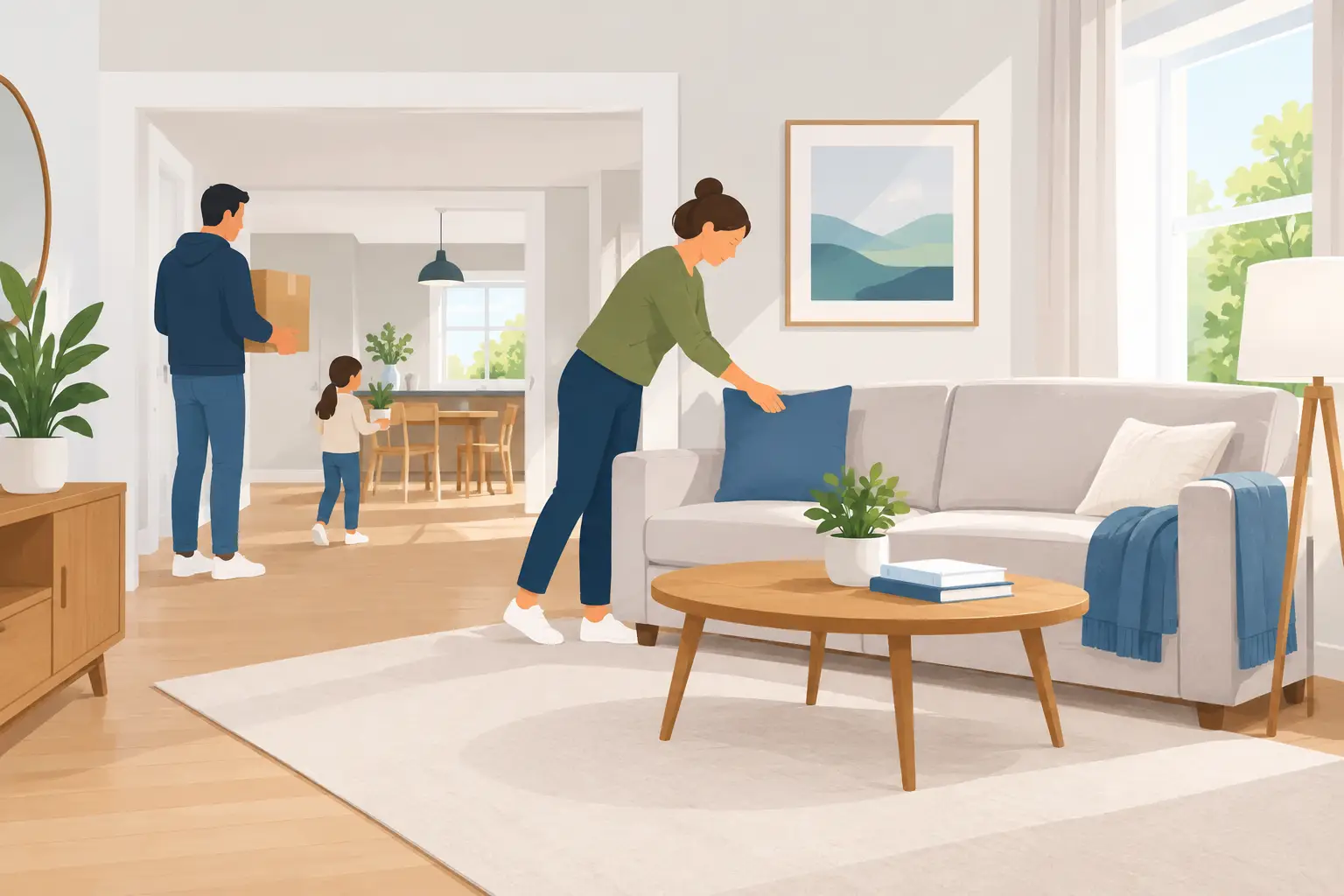
A lived-in home can sell brilliantly. Buyers do not expect a family house in Worcester, Malvern or Evesham to look like a furniture showroom. They do, however, need to picture their own life there within seconds of walking through the door. Knowing how to stage an occupied home is about making that easier without turning everyday family life upside down.
The best approach is selective, practical and honest. You are not trying to hide the way you live. You are removing the distractions that stop buyers seeing the room sizes, storage, natural light and condition of the property.
How to stage an occupied home without moving out
Start with the rooms that influence a buyer’s decision most: the front approach, hallway, kitchen, main living room, principal bedroom and garden. These areas set the standard for the rest of the viewing. If they feel bright, cared for and easy to use, buyers are more likely to overlook a minor imperfection elsewhere.
Staging an occupied property is different from staging an empty one. Your furniture, children’s things, pet beds and day-to-day essentials are still needed. The aim is not perfection at 8am on a school day. It is having a simple reset routine that gets the house ready before photographs and viewings.
Make the entrance do its job
Buyers begin forming an opinion before they reach the front door. Clear the path, remove dead plants and put away overflowing recycling boxes where possible. Check the front door, door furniture and exterior light. A clean mat and a working porch light cost very little but signal that the home has been looked after.
Inside, keep the hallway as open as you can. Coats, school bags and shoes quickly make a narrow entrance feel smaller. Leave out one or two useful items if needed, but store the rest in a cupboard, car boot or a labelled basket that can be moved quickly before a viewing.
Declutter for space, not for show
Decluttering is often misunderstood as stripping every room bare. That can make an occupied house feel sterile and impractical. Instead, edit what buyers can see. They need clear surfaces, visible floor space and enough room to move naturally through the property.
In the kitchen, this usually means putting away small appliances, washing-up liquid, paperwork, children’s artwork and anything stored on the worktops. Keep a kettle and perhaps a simple bowl of fruit. Buyers want to assess preparation space, cupboard capacity and condition. They cannot do that when every surface is busy.
In living rooms, reduce the number of cushions, ornaments and side tables. Avoid blocking windows with large furniture or drying clothes near radiators. If a room doubles as an office, pack away work equipment before viewings. A buyer may need a study, but they should see a flexible extra room rather than your working day.
Bedrooms are more persuasive when wardrobes and drawers are not bursting. You do not need to empty them, but remove enough clothing to make storage look usable. This matters particularly in period homes and smaller properties, where buyers will be alert to a lack of built-in storage.
Keep furniture in proportion to the room
A common problem in occupied homes is simply having too much furniture. A three-piece suite, large TV unit, toy storage, coffee table and multiple occasional chairs may work for family life, but it can make a decent-sized room appear cramped in photographs and viewings.
Take out one bulky item where possible. This could be an unused armchair, an extra chest of drawers or a bookcase that has become a catch-all. Borrowing temporary storage space from family, using a short-term storage unit or moving selected pieces into the garage can be worthwhile if it changes how a main room feels.
Be careful with the garage, loft and garden shed, though. Buyers will often look in all three. If you fill them to the ceiling, it may suggest the property lacks storage. Keep routes clear and leave enough space to show their real purpose.
Let every room have a clear purpose
Buyers can be imaginative, but you should not make them work too hard. A dining room used as a dumping ground, or a spare bedroom used solely for clothes airers and boxes, raises questions about space and layout.
If a room has more than one use, show its strongest one. A box room can be a nursery, home office or single bedroom. A dining area can include a small desk if remote working is part of daily life, but keep the desk tidy and make sure the dining function is still obvious.
Clean where buyers look closest
A clean home is more valuable than a heavily styled one. Buyers notice grime around taps, shower screens, skirting boards, extractor fans, windows and inside cupboards. These small details can create a wider impression that maintenance has been neglected, even when that is not true.
Prioritise the kitchen and bathrooms first. Fresh towels, an empty bin, clean mirrors and a clear bath edge make a significant difference. In the kitchen, clean the hob, splashback, sink and appliance fronts. If an appliance is staying, buyers are likely to inspect it more closely.
Do not cover odours with strong candles or room sprays. They can make buyers wonder what is being masked. Air the property, empty food and nappy bins, wash pet bedding and deal with the source of any persistent smell. A light, neutral scent from fresh air and clean laundry is enough.
Use light, warmth and simple finishing touches
Open curtains and blinds fully for photographs and daytime viewings. Clean windows, particularly in rooms with garden views or limited daylight. Replace failed bulbs and try to use matching warm-white bulbs in the same room. Mixed lighting can make a space look untidy in photos.
In colder months, a comfortably warm home feels welcoming, but avoid making it stuffy. In summer, open a window shortly before a viewing if outside noise allows. A property should feel calm and fresh, not overheated or heavily scented.
Neutral does not mean colourless. A well-kept throw, a plant, fresh bedding or a simple table setting can bring a room to life. The key is restraint. Buyers should notice the proportions of the room before they notice the accessories.
Prepare a viewing routine that works for real life
The stress of selling often comes from last-minute viewings. A practical plan will make the process more manageable for everyone in the household. Keep a large basket or two ready for quick tidying, with a designated place for toys, post, chargers and everyday clutter. Before leaving, you can gather loose items, place the basket in the car or a cupboard, and reset the main rooms in minutes.
For the final ten-minute check, focus on the details that change the feel of the house:
- Open curtains, switch on lamps in darker corners and check that all bulbs work.
- Clear kitchen and bathroom surfaces, empty bins and put washing away.
- Make beds, straighten cushions and move pet bowls, litter trays or cages out of view where practical.
- Check the temperature, ventilate briefly if needed and keep pets safely out of the way during the appointment.
If children are at home, do not apologise for evidence of family life. A few books or toys are normal. Just make sure buyers can walk freely and see the room itself. Likewise, a home with pets can still present well, provided it is clean, fresh and the animal is not competing for attention during the viewing.
Do not spend money in the wrong places
Some sellers assume staging means buying new furniture, repainting every room or replacing a kitchen. Usually, it does not. Start with cleaning, decluttering, minor repairs and better room layout. These changes tend to offer the best return because they improve how buyers perceive the whole property.
Spend money where a flaw will be obvious in photographs or likely to cause concern at a viewing. Peeling paint on the front door, a broken cupboard handle, stained silicone around a bath or an overgrown front garden are all worth addressing. Expensive renovations are more dependent on price point, local competition and the condition of comparable homes.
A straight-talking valuation should help you decide what is worth doing before launch and what is unlikely to change the sale price. At Open House Worcestershire, that conversation is about presenting the property properly, not pressuring you into unnecessary work.
The most effective staged home still feels like a home. Give buyers clean, bright rooms, clear space and an easy route through the property, then let the location, layout and potential do the selling.